
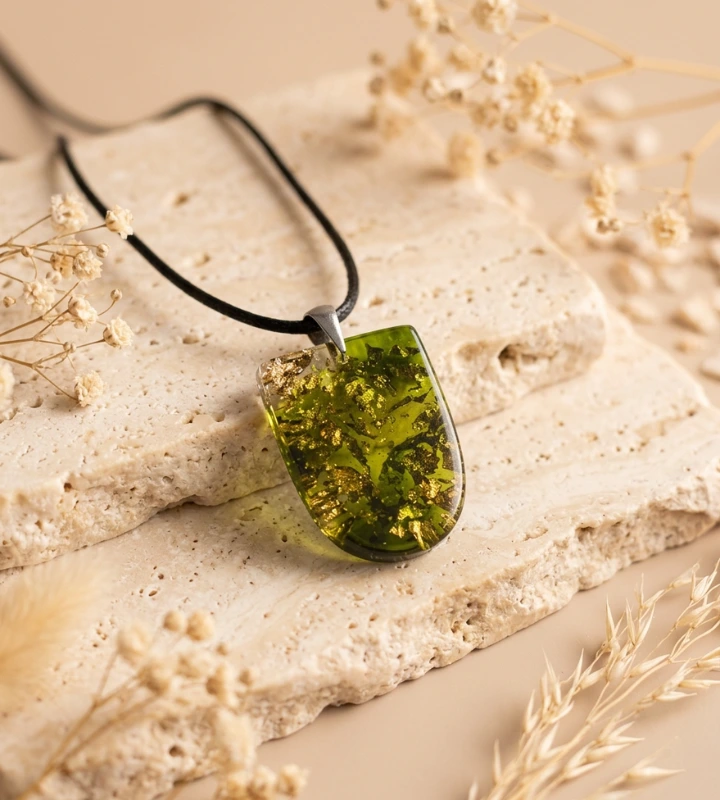
“Epoxy resin jewellery” is a popular search. But not every epoxy resin suits jewellery – and jewellery resin differs in important ways.
What is epoxy resin?
A two-part material: resin and hardener. Once mixed, it cures through a chemical reaction into a hard, clear mass. Epoxy is used in construction, for table tops, floors, casting – and in jewellery.
What sets jewellery resin apart
- Clarity – crystal clear, with no yellow tint to begin with.
- UV stabilisers – changes tone more slowly under light.
- Low viscosity – air bubbles escape more easily, giving clean casts in small moulds.
- Hardness and polishability – once cured it can be sanded and polished to a high gloss.
“Table top” or “floor” resin is designed for other thicknesses and uses – in jewellery it can scratch, cloud or yellow faster.
Is resin safe to wear?
Fully cured resin is chemically stable. The risks concern working with the liquid components, not wearing finished jewellery.
Resin in our atelier
At ZILVANO we use jewellery resin and combine it with natural materials: fossil bog oak, Baltic amber, minerals and gold-coloured flakes. Every pendant is sanded and polished by hand. See wood and resin jewellery.
Read on
Does resin yellow and how do you care for it? See resin jewellery – is it durable.